One Building or Twenty Front Doors? What a Care Home Shift and a Home Care Round Actually Feel Like
Two adverts, same job title, and yet the shifts they describe have almost nothing in common. One has you walking into the same building four days a week; the other has you knocking on a dozen different doors before lunch. Neither is better. They just suit different people, different lives and different ideas of a good day's work.
If you're weighing up a move into care in 2026 and you can't decide between a residential home and a home care round, this is the comparison we wish more applicants got before interview. No sales pitch — just what the hours actually look like.
The shape of a care home day
You arrive, you get a handover, and then you stay put. That's the headline. A residential or nursing home shift has a beginning, a middle and an end, all inside one postcode.
Mornings are the busy bit: helping people wash, dress, eat breakfast, take medication, get to activities. There's usually a rhythm to it — the same residents, the same routines, the same colleagues. By mid-morning things ease, and you might be doing laundry rounds, sitting with someone over a cup of tea, or writing up notes at the desk.
Afternoons bring visitors, appointments, activities, and the slow build towards teatime and bedtime routines. Night shifts are quieter on paper but often heavier emotionally: checks, repositioning, settling people who are confused or frightened at 3am.
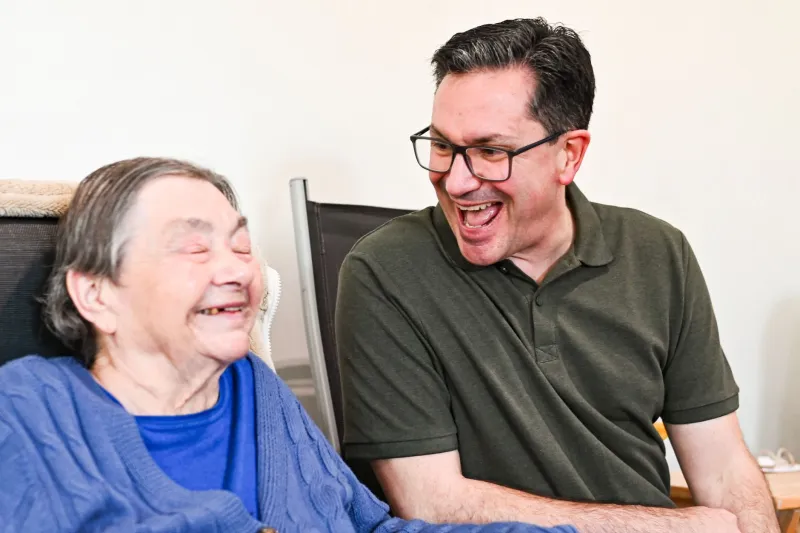
What strikes most new starters is how communal it is. You're never really on your own. That's a comfort if you like company and a pressure if you don't.
The shape of a home care day
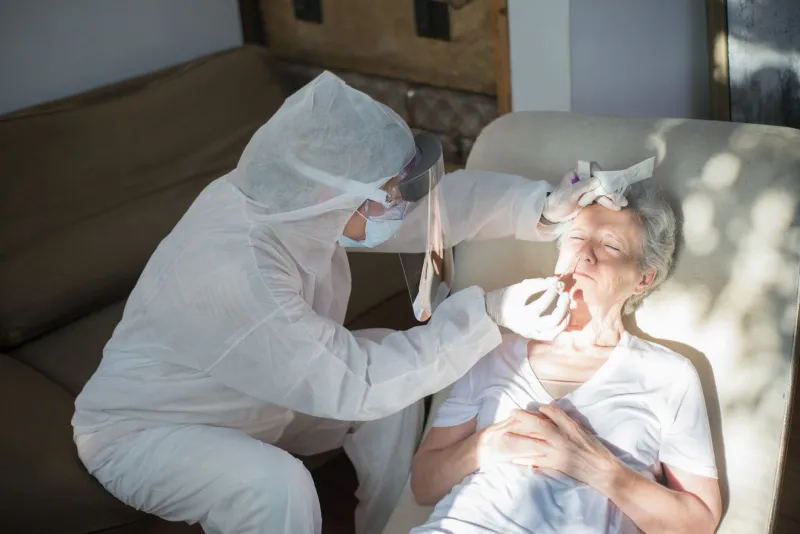
Domiciliary care — home care, in plain English — is a series of short appointments, one after another, in people's own homes. Your rota might say 7am to 2pm, but what it really means is fifteen visits stitched together with travel in between.
You let yourself in, do what's on the care plan, write your notes, lock up, drive to the next one. Then repeat. Some visits are fifteen minutes; some are an hour. Some are personal care; some are medication prompts; some are really just a chat and a check that someone's eaten.
You'll hear the phrase "lone working" a lot, and it's worth taking seriously. You are the only member of staff in that house. If something goes wrong, you ring the office — but you're the one standing there.
The upside is enormous: you see people in their own homes, on their own terms, and you build one-to-one relationships that care home staff rarely get the time for.
Teamwork versus autonomy
This is the split that divides most people.
In a home, you're part of a rota, a wing, a team. Someone always knows where you are. If a resident falls, three colleagues appear. If you're having a rough day, there's usually someone to swap a look with in the corridor. New starters tend to find this reassuring.
In home care, you're trusted to get on with it. The office is a voice on the phone, not a person down the hall. You need to be comfortable making small judgement calls — this person doesn't look right today, this visit ran over, this client is refusing their medication — and then flagging them clearly.
Ask yourself honestly: do you want backup close by, or do you want to be trusted to manage your own round? Both are valid. Trying to be someone you're not is where people burn out.
Travel, transport and the money nobody mentions
Home care runs on wheels. If you don't drive, you're relying on public transport, a bike, or an employer who runs walking rounds in a tight patch — and those exist, but they're rarer.
If you do drive, ask about mileage. Some employers pay it properly; some pay a flat rate; some don't pay between visits at all. That difference can be worth hundreds of pounds a year, so get it in writing before you sign.
Also ask how travel time is counted. Paid travel between calls is the good version. Unpaid travel with a ten-minute gap is the version that quietly eats your lunch break.
Care home work is simpler on this front: one commute, one destination, no parking roulette at nine different addresses.
Paperwork and the clock
Neither job escapes the keyboard, but the pressure lands differently.
In a home, notes tend to be written on shift, often at a computer station, with colleagues around and a bit of slack if the morning runs late. In home care, notes are written in the car, on a phone app, in the two minutes between visits, because the next person is waiting.
If you're someone who likes to write things up carefully, home care can feel rushed. If you hate sitting at a desk, home care's in-and-out style might suit you better than a long handover meeting.
Emotional load, two different flavours
Care home work is about closeness over time. You get to know people properly — their families, their jokes, their decline. When someone dies, you grieve, and then you're back on shift the next day with everyone else who loved them. That's a particular kind of weight.
Home care is about intimacy without much time. You might see someone twice a day for two years and still not know their daughter's name. You become a steady presence in a life you only glimpse. The difficult part is often leaving — and the drive to the next visit doesn't always give you space to process what you've just seen.
Both are emotionally demanding. They're just demanding in different keys.
Questions worth asking at interview
Bring these to your next interview and you'll learn more in ten minutes than from any job description:
- Can I shadow a shift before I accept? (Ask for a real shift, not a tour.)
- How much travel is in a typical round, and is travel time paid?
- What's the mileage rate, and when is it paid?
- How many visits per shift, and what's the shortest visit length?
- What happens when a visit overruns — do I get support, or a telling-off?
- Is there a lone working policy, and what does it actually say?
- How often will I be asked to cover weekends and bank holidays?
- What's the handover like at the start of a shift?
So which one fits?
If you don't drive, need predictable hours, or want colleagues nearby while you find your feet, a care home is the softer landing. If you drive, like your own company, and want one-to-one time with people in their own homes, home care can be genuinely lovely work.
Plenty of people try one, then the other. That's not failure — it's research. And in a sector that's short of good workers, nobody will hold it against you for finding out which setting you're actually built for.