The Ten-Minute Relay: How to Take and Give a Care Shift Report
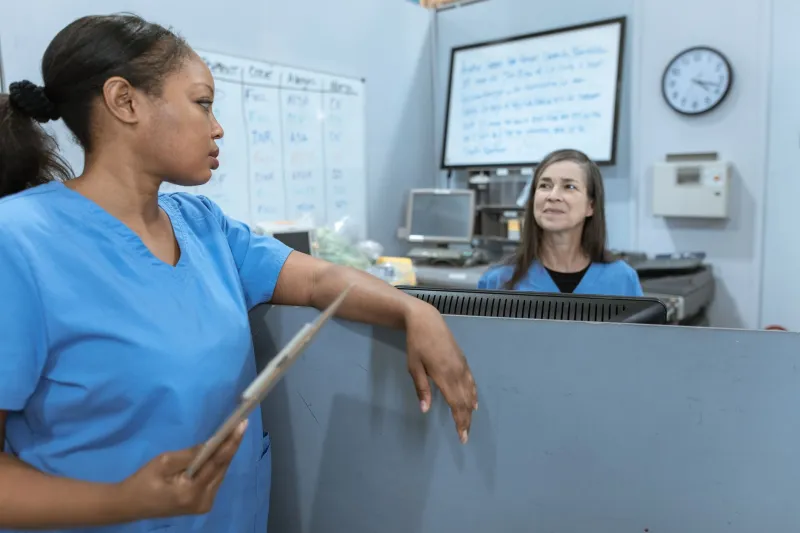
Handover is one of those parts of care work that nobody puts on the recruitment poster. You won't see 'excellent baton-passing' in many job ads. Yet the ten or fifteen minutes at the start and end of a shift can shape the whole day for the person you're supporting. If you're new, it can feel like everyone else speaks fluent acronym and you've been handed a clipboard and a prayer. The good news is that handover is a skill, not a personality trait. It follows a rhythm. Once you know the rhythm, you can stop worrying about getting it perfect and start using it to keep people safe.
Why handover feels like a different language
Every service has its own shorthand. One team says 'personal care'; another says 'PC'. Someone mentions a MAR chart and you're still working out where the kitchen is. That's normal. A good handover isn't a test of how much you can memorise. It's a safety conversation: what has changed, what needs doing, and who needs to know. If you hold on to those three questions, you'll be fine.
What a useful handover sounds like
Compare these two versions. 'Mrs Patel was fine overnight.' Or: 'Mrs Patel slept badly, refused breakfast, and said her knee was sore. I've given paracetamol and booked her in for the GP call at ten. Please keep an eye on her fluid intake and let the nurse know if she hasn't had a drink by lunch.'
The second one is not longer for the sake of it. It names the change, the action already taken, and the next step. That's the pattern. Change, action, next step. You don't need a life story. You need the bit that helps the next person provide good care.
A useful handover also describes people, not labels. 'Refused lunch, said she felt sick, asked for toast later' tells the next shift something they can act on. 'Being awkward' tells them nothing useful and follows the person around. Stick to what you saw, what you were told, and what you did.
Before the last shift leaves
New care workers often freeze at handover because they don't know what to ask. You don't need a perfect list. You need a few reliable questions. Try these:
- What's changed since I last worked?
- Any falls, incidents, missed medication, safeguarding concerns, or family worries?
- Who needs prompting at meals or with drinks?
- Any appointments, district nurse visits, or equipment problems?
- What would you want me to watch for today?
- What's still pending, and who owns it?
If you only ask three, ask: what changed, what's pending, and what would you worry about if nobody followed it up? Those three will catch most of the important stuff.
It also helps to check where information lives. Is there a handover sheet, a communication book, an online care plan, a diary? Ask someone to show you once. Write it down. Nobody expects you to remember every folder on day one, but they will expect you to know where to look.
Note-taking without freezing
You don't need shorthand. You need a simple grid on your notepad: name, change, action, who. Or three words: watch, do, tell. Write facts, not feelings. Keep it brief but clear.
Abbreviations are fine if everyone uses them and you know what they mean. If in doubt, write it out. Keep notes on your person, not on a scrap of paper left in the staff room. Never use your own phone to photograph a handover sheet. That's a confidentiality problem waiting to happen, even if your intentions are good.
Giving your own report at the end
Use the same formula in reverse. Say what changed on your shift, what you did, and what's next. Include the ordinary things that matter: food and fluid, mood, mobility, skin, toileting, sleep, pain, and any incident or near miss. Don't save up a fall for a chat in the corridor. Report it properly.
Avoid blame language. 'I noticed', 'I asked', 'I escalated' is clearer and fairer than 'she was being difficult' or 'nobody told me'. If something is unresolved, say who owns it. 'I've left a message for the district nurse; the call is booked for tomorrow at nine.' That gives the next shift a baton, not a mystery.
Keep it need-to-know
Confidentiality isn't about being secretive. It's about sharing the right information with the right people at the right time. Handover should happen in a private space, not a busy corridor or a public cafe. Don't discuss residents or clients in the staff room with people who aren't involved in their care. Don't post about your day on social media, even vaguely. And don't take handover sheets home in your pocket. Use the secure systems your employer provides. If you're unsure whether you can share something, ask your supervisor.
If the handover you get is rushed
You are allowed to ask for the information you need. If the previous shift is already putting their coat on, say: 'Before you go, I haven't got anything on X's fluid intake. Can you point me to it?' Read the handover sheet before you start. Flag gaps. If critical information is missing, such as medication, allergies, or a safeguarding concern, tell the senior person on duty. Guessing is not part of the job.
A small habit that helps
At the end of every shift, write three lines before you leave: what changed, what's pending, what I'd want the next shift to know. It takes two minutes. It's not extra paperwork; it's a kindness to the next person.
And if you're applying for care jobs in 2026, it's worth asking at interview how handover works. An employer that takes handover seriously is usually an employer that takes support seriously. At All Care Jobs, we think that's the kind of detail worth checking before you accept.